|
The AI Conundrum: Occam's Razor, Pope Leo, and Frankenstein's Monster The Hans Rosling Center for Population Health Wednesday, July 22 • 5:30 PM - 7:30 PM Organized by UW Communication Leadership, ComNetworkSeattle, and UW WELead  It’s been about a month since the AI Conundrum Workshop at the UW, and I, for one, have not stopped thinking about the practice, reflection, and deep meaning Sandy Cioffi brought into the space through her presentation. This conversation was mind-shaking in some regards; in Sandy’s own words, ‘a big-picture, context-setting conversation about the questions underneath the technology, and how we can situate ourselves in them meaningfully.’ It was a roller coaster ride of existential thought, from considering Occam’s razor as a metaphor not just for how AI works, but for how AI learns. As she illustrated over the course of the workshop, AI is about language, not necessarily meaning. The meaning is derived from us, through us, and because of the experience of being us. The word fire does not burn. The word grief does not ache. An LLM has learned the surface texture of meaning without ever having access to the thing that produced the texture. - Sandy Cioffi
This was summed up so astutely in a student assignment in my Internship class recently, where I asked them to consider their use of AI in an internship setting. The student positioned themself as the central authority. “I remain responsible.” AI should acknowledge uncertainty, require human review, and let us question the practicality and usefulness of the advice it gives us. As Pope Leo XIV said in Magnifica Humanitas (2026): Machines do not possess a body. They do not feel joy or pain. They do not know from within what love or responsibility mean. Sandy pointed out that IBM has been aware of this issue since 1979, and we are still not listening.
She thoughtfully brings it back to the core of our humanness. Her point being that our bodies are not computers, but our physicality is a kind of intelligence. In order for meaning to be made, there must be a body present to receive it. As we’ve seen, that kind of embodied intelligence cannot be trained into an LLM. For example, Sandy brought up Frankenstein AI: A Monster Made by Many, a multi-year research project using immersive theater at Columbia University’s Digital Storytelling Lab. They built and trained an AI on Shelley’s novel and fed it real data and emotional context from humans, and the system reflected those inputs back as an interpretation, albeit one that was not at all transparent in source or significance. What happened? The AI flattened Shelly’s novel, but in its place it reflected back with enough context that the people in the room felt something. Not because AI understood the assignment and could relate to the connections being made, but because it created the conditions for humans to feel. A machine could not do this alone; it needed to be fed real human sentiment, but through that machine intelligence, it produced something unique. An encounter. I’m paraphrasing Sandy here: ‘the monster did not create meaning, but it created the occasion for the humans in the room to feel something new.’ So what do we do with this information? How do we translate it into our daily lives and practice with LLMs? She gave practical recommendations on where and when to engage with AI in your process. “Understanding where you are in your creative cycle helps you determine what it can and cannot do for you.”  Links to Sandy’s slides: Canva: https://canva.link/comnetseattlesummer26 Flipbook (with notes): Seattlecomnetcioffitalk.netlify.app Here are a few practical nuggets from Sandy that I keep on a sticky note on my desk:
What did you take away from this talk? We are already thinking about what comes next, and your two minutes on this Google survey will help us shape that directly. What is the ending? I don’t think we know yet. But the big-picture takeaway I got from Sandy's talk was that we need to keep building literacy, transparency, and responsibility around and into our use of AI. It is a tool, and it is up to us to supply what only we can supply: our body, our brain, our meaning.
0 Comments
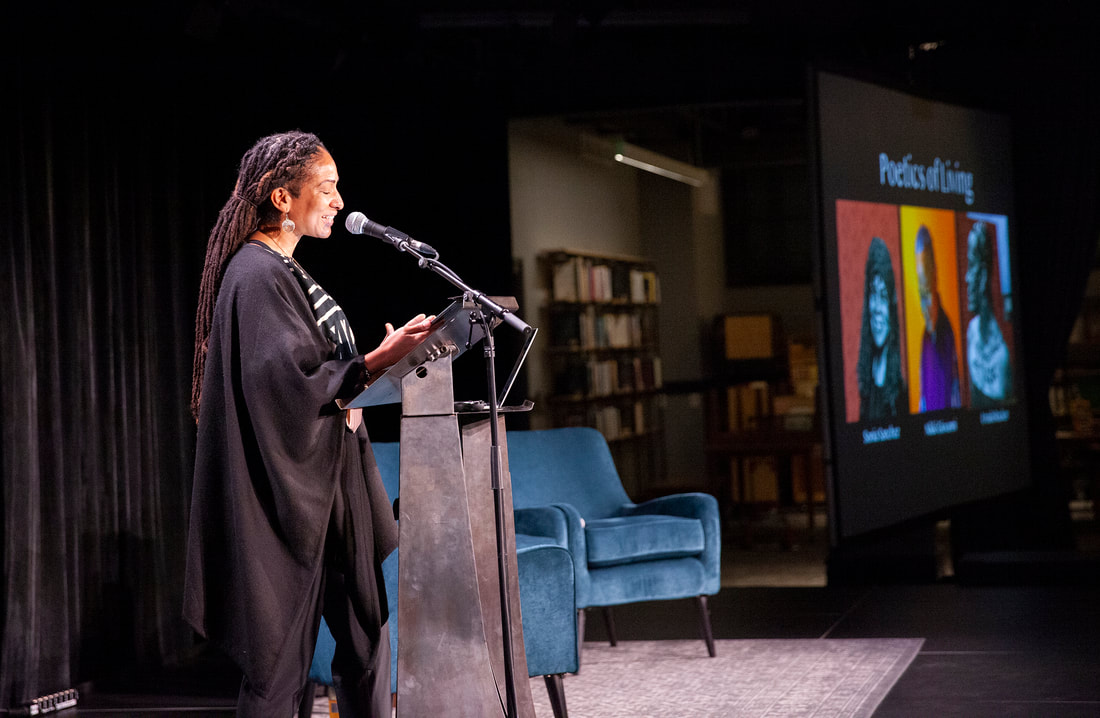
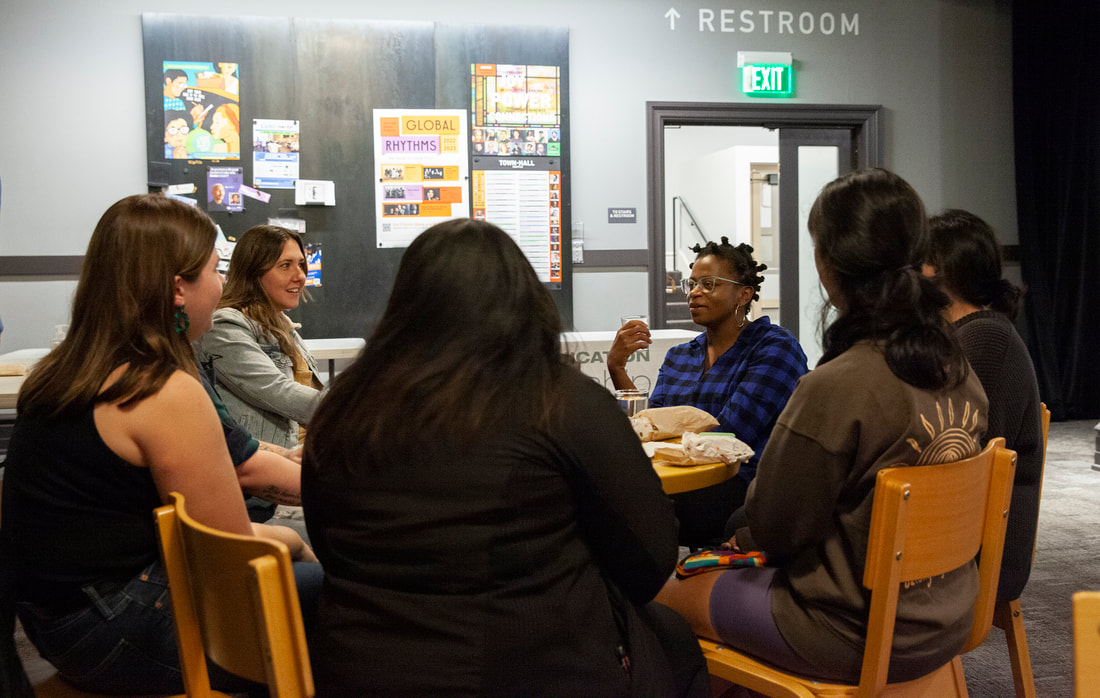
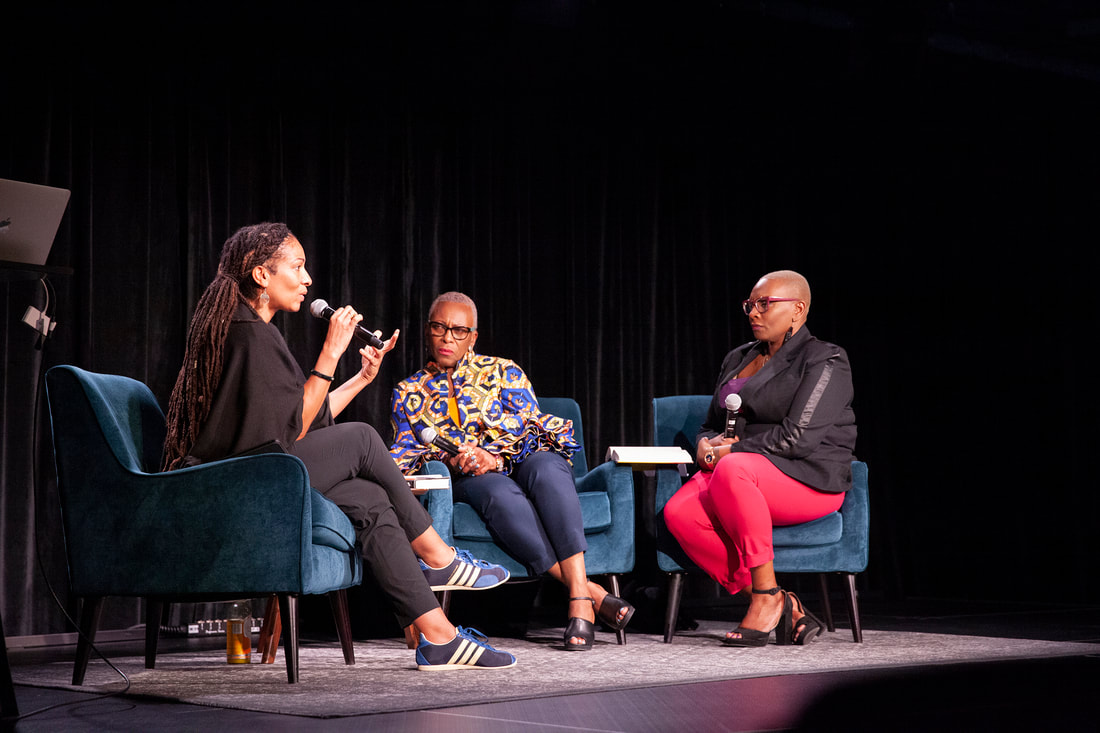 Every day we have an opportunity to add value to the world. In the Communication Leadership Program, we encourage our students to combine passion with skill to become a force for positive change in our communities. We have the power to grow the world we want by connecting with people, engaging in meaningful, ethical, and respectful ways, building stronger relationships, and encouraging others to do the same. Ruha Benjamin, author of Viral Justice: How We Grow the World We Want, is asking us to rethink the importance of these small, individual actions. Her talk at Town Hall on October 17th (co-sponsored by our master’s program) focused on the seemingly insignificant decisions that can spread “viral justice.” Ruha described viral justice as a way to redistribute resources to overcome inequalities and to create communities of care that support our needs. Injustice affects us all. We need to look at ourselves and individually confront how we participate in systems that are unjust. We must question the narrative that has been handed down to us and collaborate with others to “seed a different world.” Ruha brought to light people who are doing seemingly small actions with life-changing impacts. She spoke about Ron Findley, the “Gangsta Gardener” who is turning empty plots and right-of-ways into thriving community gardens in his neighborhood of South-Central Los Angeles. And Christopher Emdin, who is using hip hop culture and music to revolutionize how kids learn about the beauty and wonders of science through #HipHopEd. Ruha is showing us that pairing knowledge and creativity with togetherness generates amazing results. We must remember that small changes can add up to large differences that transform our communities and relationships. World-building is messy work. We need to find a plot in our own backyard, get our hands dirty, and water what we want to grow to build a more just and joyful world.
|


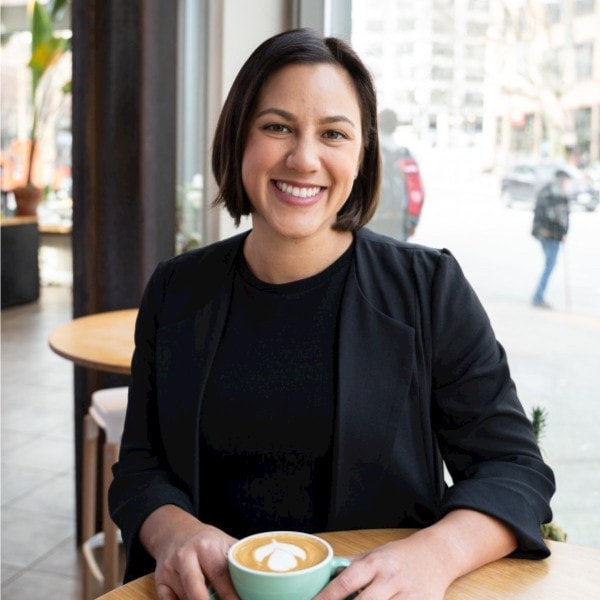 |
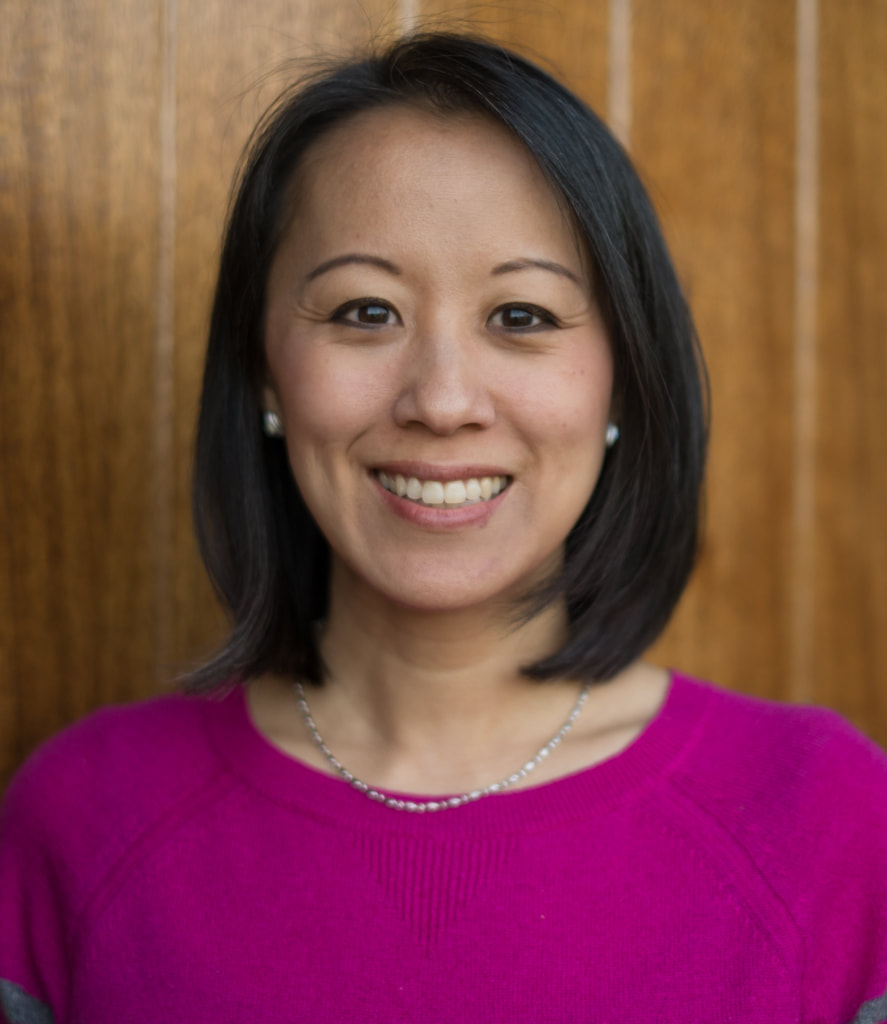
I'm a kid from LA. I had big dreams as a 9th grader to become a clinical psychologist, which happened through a healthy dose of counseling as a preteen and a teenager. I went on this journey to be a clinical psychologist, and along the way I realized, ‘I don’t want to be a clinical psychologist. What am I doing?’
What I found that I loved was looking at systems and how things move: the built environment, or systems of care in general, a hospital system or rehabilitation system, and how we could better support people's healthy behavior. Specifically, I focused on the intersection of people with physical disabilities, cognitive disabilities, and aging.
For the first time in the history of humanity, we have this whole new cohort of people who are surviving spinal cord injuries, strokes, and heart attacks with differences in physical and cognitive impairments. It is both a beautiful and a complicated thing.
That brought me to where I am now, which is, ‘How do I continue this work without the boundaries and constraints of academia? How do I immerse myself fully in supportive policy to make lasting change? How do I create change for the better in a way that is reactive and meets the moment and is not bound by grants, or research, or other kinds of mundane tasks that academia can often put on me?’
That's a really great question. I currently work for foundations that are supporting the policy work happening in California. They are committed to helping California create a 10-year master plan for aging. The foundations realized that they could only do so much, so they decided to band together and support consultants to help California prepare.
Our older adults are going to be outnumbering young adults. We know we don't have the policy and regulations for them, we know we don't have the workforce for them, we know now, with Covid-19, that we have nothing for them. How do we do that?
That is how I found the need to create my business, to pivot to going out on my own. What is unique about me is having a research and academic background that is not common in policy. I can talk to researchers, statisticians, and local governments that have this data and can be both a translator into the policy as well as ask for numbers when things don’t add up.
The most important thing for me is to just be honest about what I can provide, about my expertise, about whether this is a good fit, and just hope for the best.
Mostly, when it comes to choosing a consultant, it’s ‘Who do you want to spend time with?’ It's like picking a vice president. Who do you want in the Oval Office with you at the end of the day? Who do you want on the phone with you at 10 o'clock at night when your house is burning down? Who do you want riding shotgun with your team when you don't have time?
For a lot of folks, it really comes down to personality and how much you are listening to the needs of the project, of the organization, and trying to match that up. I will say that there's a lot of companies or opportunities that I know might not be a great fit for me, so I try to be really upfront with that.
How would you define success based on your experiences?
Part of the problem and opportunity of being a young person is how everything feels like it's a process. Success is a building block, and doesn't always come from checking off a box.
A lot of times success comes from failure, and then the opportunity to create a better, more sustainable system, or opportunity. It’s not only how do you define success, but how do you hold it up as success to your clients, that this skill is something that I am a master of.
What would you say are the three top skills that you think it takes to be a successful entrepreneur?
I think to be successful, one of the things that comes to mind on the business side is, ‘Are you checking all your boxes?’ Are you paying your bills? Do you have a license in the state that you need? Are you paying your taxes on time? I don't think people understand how important taxes, invoicing, and accounting for your time are. You need to be an expert in things that you never thought you needed to be an expert in to run a business, and I find that has been the biggest hurdle for me. That’s the down and dirty of the things you wish you knew.
With that comes number two, which is knowing when to outsource. I should never prepare my own taxes, ever. There's no world in which I am qualified for that. It's okay, I have lots of other skills, but that is not one of them. Thankfully, I work with a very skilled person who can do that.
Third, you need to be knowledgeable and distinguish yourself from others. You need to have a good reputation. You need to be able to rely on your clients, your colleagues, and your friends to be good references and to say nice things about you, to believe in what you're doing so that you can rely on them.
There is a huge digital divide in the nation. The internet is not just how we communicate, right? The internet is information. It's tele-health. It's how we order our groceries. It's how we order books, whether we're borrowing or buying or downloading to listen. It is how we stay connected with our family and friends. It's how we do these interviews. It is literally everything.
It is imperative that we invest in diverse communities and communities who are not generally connected to the Internet, to have the Internet if they want it. The big push now is to think of broadband as essential, just like heat and water. We need to continue to invest in that.
We need things to be fully accessible. We need people who have low vision and low hearing to be able to access the internet. We need to reach diverse communities, expand language capacity, and find and create solutions for those most vulnerable. There are so many ways we can create opportunities for communication, safety, and collective public health.
What have been some of your experiences as a woman in business?
It is very tricky to be the younger generation of policy and research coming into this field, and to be considered a “young female.” One of my close colleagues told me basically, right now, you are the shiny new thing, so take advantage of that. You are young, bright eyed, and bushy tailed. That is also what is going to hold you back. What ends up happening is somehow at 40 you are too old, and your experience still doesn't help. It’s constantly this issue of living in your youth, and also preparing for that to leave you.
Choosing clients has been really interesting, just as a female and the things that define us. I have two older parents who are in their early seventies, and they've got pre-existing health conditions, and I stay on the West Coast for them. I cannot tell you how many opportunities are presented to me on the East Coast that I have to say no to. I am basically being told that I'm ruining my career. So being the eldest child, wanting to be close to my parents, wanting to be a successful member of my family, and doing all of those things, are also ways that I'm ruining my career. It is very complicated, but I just keep moving.
Edited for clarity and length.
What’s more, firms owned by women of color account for 50 percent of all women-owned businesses. An estimated 6.4 million women of color-owned businesses employ nearly 2.4 million people and generate $422.5 billion in revenue.
With the continuation of COVID-19, women-owned businesses have been disproportionately hit, and a quarter of these businesses have had to close. There are real challenges facing women business owners, and as communication leaders, it is our responsibility to advocate, build, strengthen, and serve our community, while supporting them through times of transformation.
At Communication Leadership Consulting, a majority of our clients have been women-led non-profits, women-owned small businesses, and women communication leaders. In fact, out of 82 clients, we’ve served only 13 non-profits or small businesses with men at the helm.
It is with this in mind that we ask you to learn about and support these women-owned businesses who make a difference to our economy, but are being inordinately affected by the systemic discrimination, health, and economic crisis in our midst.
Join us as we feature interviews with women business owners, non-profit directors, and communication leaders who are working to overcome these challenges every day.
Click here for more information about our services.
Click here to volunteer for Communication Leadership Consulting.
Author
Musings on business, womanhood, consulting, and things I find interesting.
Archives
October 2022
May 2022
January 2021
October 2020
June 2020
May 2020
April 2020
March 2020
January 2020
December 2019
September 2019
August 2019
August 2018
July 2018
May 2018
April 2018
Categories
All
Art
Artists I Admire
Business Strategy
Cai Guo-Qiang
Climate Change
Color
Communication
Covid 19
Covid-19
Design
Design Thinking
Environment
Fire
Handmade Cards
Interviews
Joan Miro
John Baldessari
Leadership
Nonprofit
Pacific Northwest
Photography Show
Polaroid
Polaroid Land Camera
Push.Pull Photography Collective
Small Business
Square Framed Prints
Technology
User Experience
Women In Business
Women Owned
Women Who Lead
 RSS Feed